 Get Involved
Kentucky’s Electric Vehicle Infrastructure Deployment Plan
Kentucky is actively implementing its EV Plan. The plan’s vision is a reliable, accessible, convenient, and affordable EV charging network that supports transportation choices, energy diversification, economic development and environmental sustainability for all Kentuckians.
Federal approval of Kentucky’s latest EV plan secured $17.8 million in previously pledged funds to support Phase 2 and Phase 3. These phases will expand charging infrastructure along other priority corridors, in communities, and at destination sites statewide. NEVI funds totaling $55 million have been obligated for fast-charging stations in the state. The Federal Highway Administration updated National Electric Vehicle Infrastructure (NEVI) program guidance to states in summer 2025.
Kentucky's EV Charging Program
As more Americans and Kentuckians are interested in purchasing EVs, having a reliable network in place to support long-distance travel is key to giving drivers the confidence to roam.
Kentucky was allotted nearly $70 million in federal funding through the Bipartisan Infrastructure Law to expand EV chargers over the next five years. The creation and update of the EV Infrastructure Deployment Plan are requirements to unlocking funding to build infrastructure along Alternative Fuel Corridors.
The Kentucky Transportation Cabinet and Energy and Environment Cabinet, in partnership with the Public Service Commission and Federal Highway Administration, developed and submitted the initial plan in May 2022. The latest plan was submitted September 9, 2025 and approved on September 16, 2025.
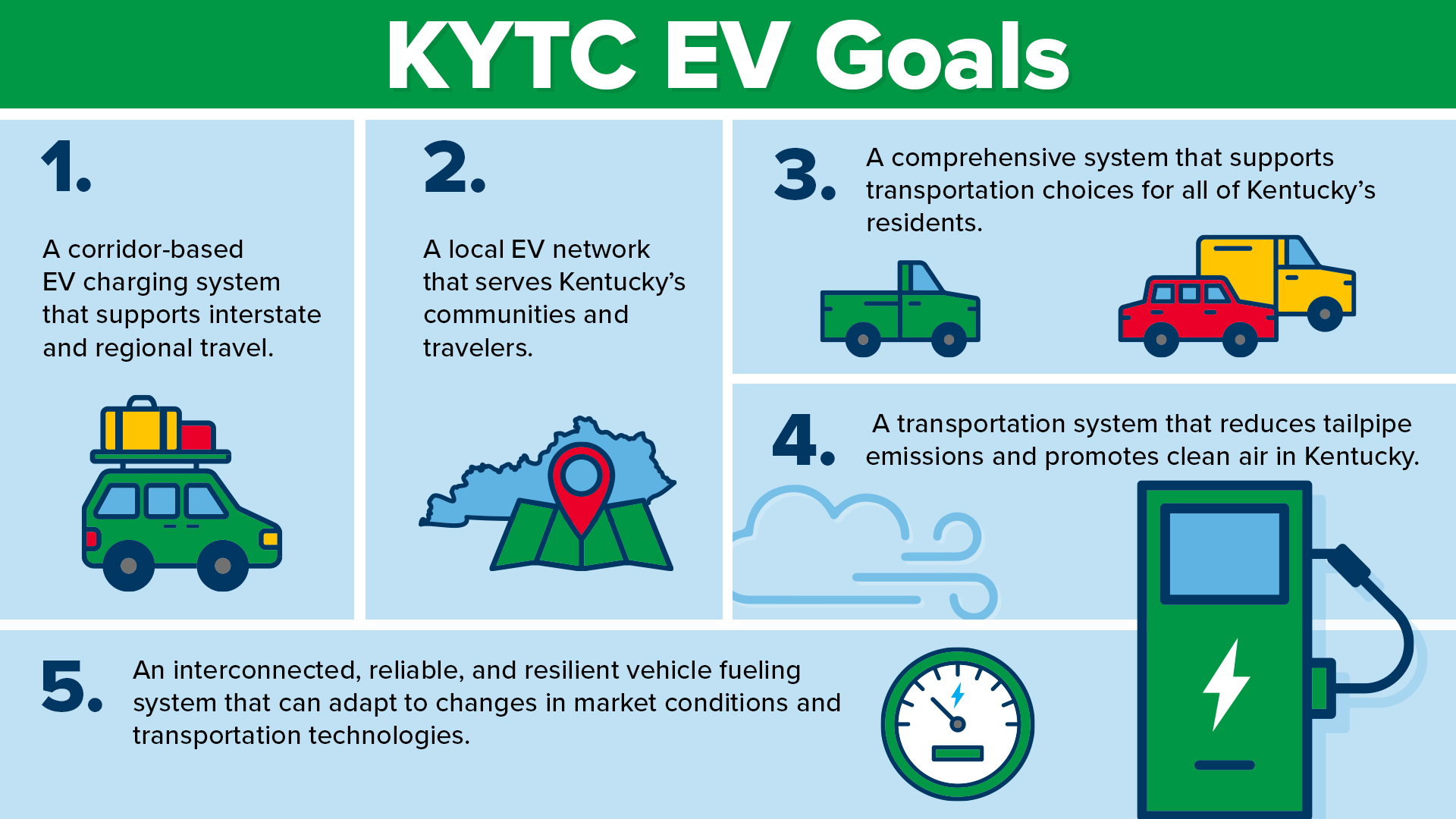
| Goal | Performance Metric | Five-Year Target |
|---|---|---|
| A corridor-based EV charging system that supports interstate and regional travel | System miles covered by EV charging stations that meet the standards outlined in this plan | >800 miles |
| A local EV network that serves Kentucky’s communities and travelers |
Number of residents and employees within 15 and 50 miles of EV charging stations installed using NEVI funds |
TBD as Part of Implementation Process |
| A comprehensive system that supports transportation choices for all of Kentucky’s residents |
Number of rural areas and and/or disadvantaged socioeconomic areas within 15 and 50 miles of EV charging stations installed using NEVI funds |
TBD as Part of Implementation Process |
| An interconnected, reliable, and resilient vehicle fueling system that can adapt to changes in market conditions and transportation technologies | Percent operational time for EV charging stations installed using NEVI funds. | >97% Uptime |
| A transportation system that reduces tailpipe emissions and promotes clean air in Kentucky | Number of registered BEVs in the state of Kentucky. | TBD as Part of Implementation Process |
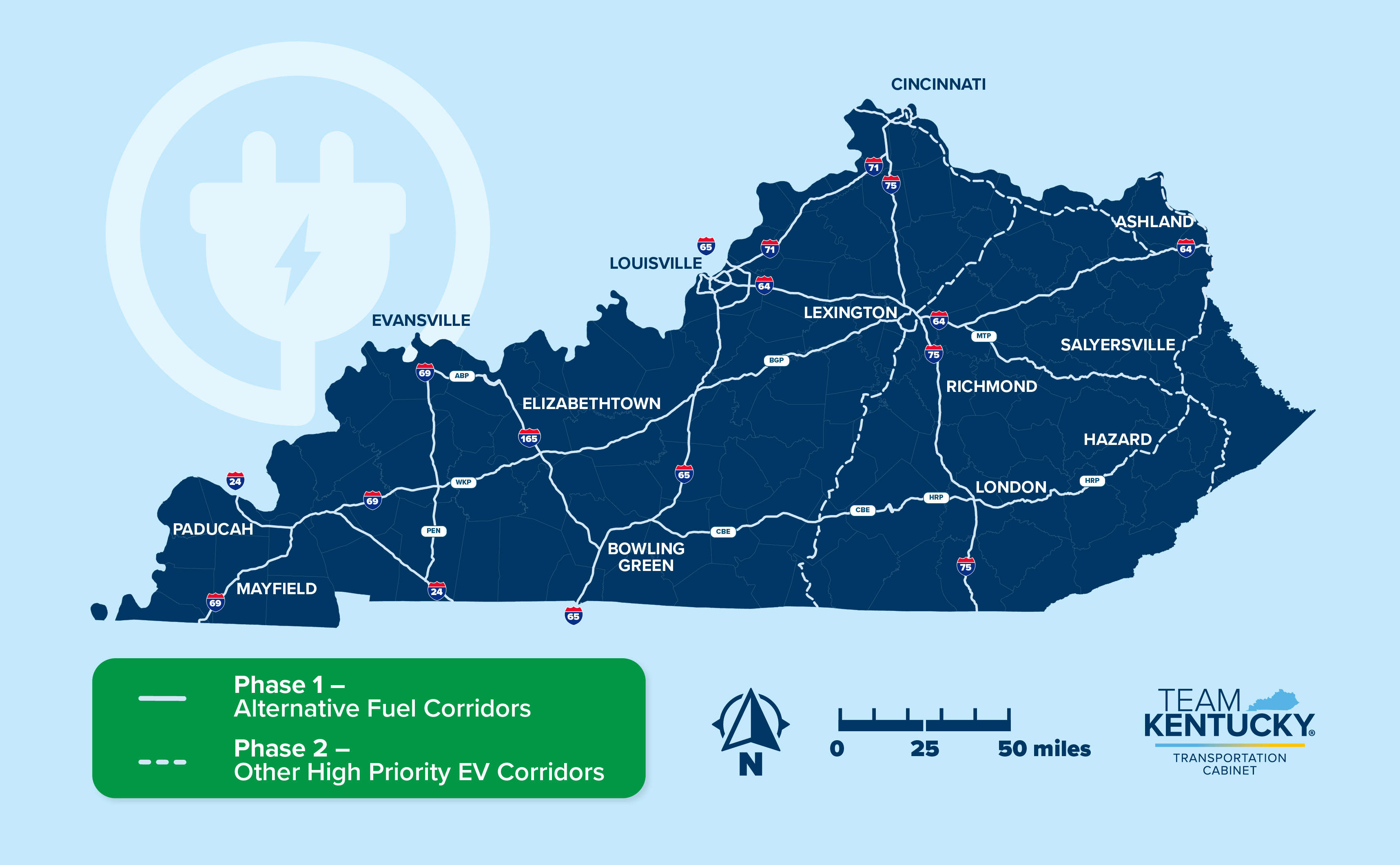
Kentucky's Priority EV Corridors
Request for Information
KYTC issued a Request for Information (RFI) to gain input from potential market participants across various sectors concerning the planning, deployment, operation and maintenance of the DCFCs and Electric Vehicle Supply Equipment (EVSE) in Kentucky.
Request for Proposals
KYTC has issued four Requests for Proposals (RFP). RFP 4 was issued May 29, 2026, and closed on July 13, 2026.
Awards are anticipated later in summer 2026.
KYTC will not own, operate or maintain charging stations and will work with the private sector and other industry partners on procurement.
Barriers to EV Adoption in Kentucky
KYTC reached out to hundreds of stakeholders during the first half of 2022 for the development of the first version of Kentucky’s EV Infrastructure Deployment Plan. Some of the most important feedback was about barriers to the adoption of EVs in Kentucky. One of the most important and exciting conclusions was additional charging infrastructure was one of the top concerns. This is something KYTC and the Federal government are doing something about right now. KYTC has developed a plan to expand the DCFC charging network and the implementation of that plan is funded through the NEVI Program Formula Funds.
Demand, Suitability, and Prioritization
The plan outlines the demand for EV charging on Kentucky’s highways over time as well as locations that are suitable for locating chargers. It also highlights locations that are a high priority given the requirements of FHWA’s primary focus and the goals of the Commonwealth to serve all Kentuckians across the state.
Importance of Serving All Kentuckians
Providing services throughout the state including rural areas and/or disadvantaged socioeconomic areas is important for successful implementation of the EV Plan. KYTC considered access and related factors in the development of the deployment plan.
Private Industry Partnership and Contracting
KYTC will contract with outside third-party entities who will install, own, operate and maintain the EV infrastructure for the Commonwealth. While the DC fast charging stations will be constructed using NEVI funding, KYTC will not own, operate or maintain the stations. KYTC will oversee the installation of the stations and will monitor performance during the five-year life of the NEVI program.